House Clearance Slough: Recycling & Sustainability Commitments
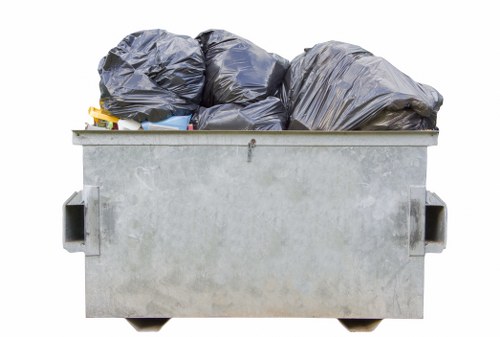 House Clearance Slough takes an eco-friendly waste disposal area approach seriously. From the moment we book a clear-out to the final drop-off, our priority is to divert as much material as possible away from landfill and into reuse, recycling or proper disposal channels. Our Slough house clearance teams follow a structured sorting process on-site, separating timber, metals, textiles, glass and electricals so that each material stream can be handled in a sustainable way.
We work with the borough’s guidelines and the wider region to ensure our processes sync with best practice. The local authority's approach to waste separation encourages kerbside collections for dry recyclables, food waste and residual refuse, and we align our internal sorting with those streams where practical. By matching the boroughs approach, we increase the chance that materials we send on will be processed correctly at local transfer stations rather than being lost to mixed waste.
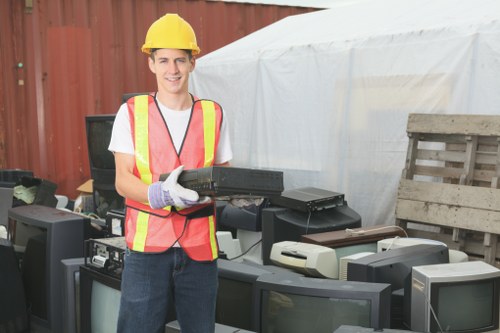 Our target is clear: we aim for a 75% recycling percentage target across all domestic clearances in the Slough area within the next five years. That target is ambitious but realistic — it combines direct reuse, donations, seller networks and material recovery facilities to push reusable items back into the community and recyclables into proper processing lines.
How materials move through the sustainable rubbish area
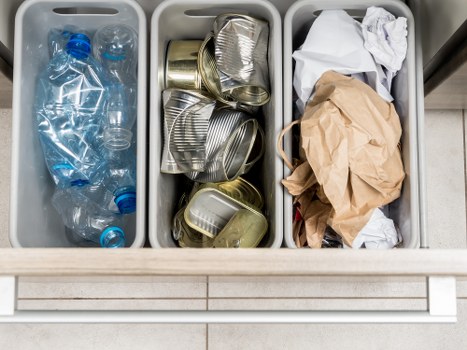
When crews attend a property, items are assessed for immediate reuse. Bulky furniture, working appliances and good-condition textiles are boxed separately for donation. Items that cannot be reused are sorted into dedicated streams: metals, wood, plasterboard, mixed recycling and hazardous wastes such as batteries and old paint. By separating these layers early, we create a lower-contamination feed for recycling partners and reduce the need for secondary sorting at transfer hubs.
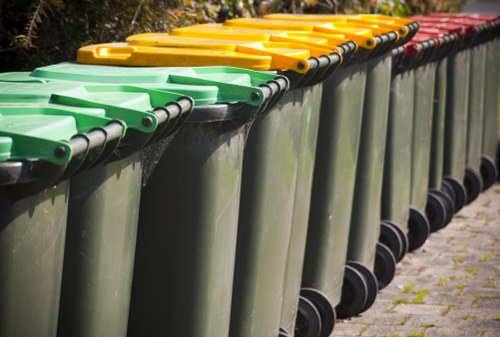 Local transfer stations play a vital role in our logistics. We make frequent deliveries to Slough’s household waste facilities and nearby regional transfer stations operated by the borough and neighbouring councils. These hubs handle onward processing for compacted loads, sorting into material recovery facilities (MRFs), composting sites and specialist recyclers for electronics and metals. Using local transfer stations reduces haulage distance and keeps carbon emissions lower than long-distance disposal.
To support this, we maintain a transparent chain of custody for every load — a simple slip records what was collected, what was donated and which transfer point received the materials. That record-keeping helps monitor performance against our recycling percentage target and gives us the data to fine-tune routes and sorting practices.
- Kerbside compatibility: we align collected materials with Slough borough collection types.
- Local processing: we prioritise nearby transfer stations and MRFs to reduce transport emissions.
- Segregation: on-site sorting increases recovery and resale value.
Charity partnerships and low-carbon transport
We have active partnerships with local charities and community reuse organisations to maximise reuse opportunities. Good-condition furniture, collectable items and appliances are offered to local charity shops and social enterprises before any route to scrap is considered. Partnering with regional reuse networks and donation centres keeps items in circulation, benefits local people and reduces the demand for new products.
 Low-carbon vans form the backbone of our low-impact fleet. We operate hybrid and electric vehicles on urban rounds within Slough to cut emissions and improve air quality in densely populated neighbourhoods. Route optimisation software ensures fewer miles and fuller loads, and for inner-town clearances we sometimes deploy low-emission cargo bikes and small vans to reduce noise and congestion.
 Monitoring and continuous improvement are central to our sustainable rubbish area ambitions. We review recycling rates monthly, update staff training on waste separation, and refine partnerships with local transfer stations and charities so donations are processed quickly and used effectively. By combining careful on-site sorting, transparent records, charity reuse pathways and low-carbon transport, our Slough house clearance services aim to be a leader in eco-friendly waste disposal.
