Health and Safety Policy for House Clearance Slough
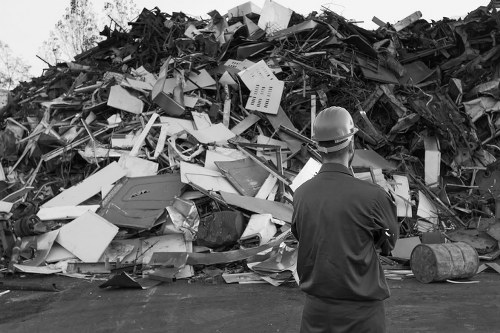 This Health and Safety Policy sets out the commitments and practical controls applied by House Clearance Slough to protect employees, contractors and residents during house clearance and rubbish removal work. The policy applies across our rubbish company service area and to all core activities including clearance, disposal, transport and short-term storage of waste. Our aim is to minimise harm through structured risk assessment, staff training and consistent operational controls while maintaining high standards of environmental stewardship.
We adopt a proactive approach to risk management: regular site inspections, up-to-date method statements and dynamic monitoring ensure hazards are identified and controlled. Managers are accountable for ensuring safe systems of work are used, and employees are responsible for following instructions, using personal protective equipment and reporting unsafe conditions. All operatives receive task-focused induction and refresher training appropriate to rubbish clearance tasks including manual handling, use of mechanical aids and safe vehicle loading.
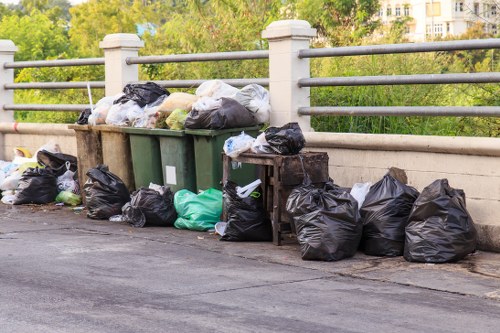 Risk assessment is central to safe service delivery across our rubbish collection service area. Every job is assessed before work begins to identify slip, trip and fall risks, manual handling exposures, potential hazardous materials and site access constraints. Controls are proportionate to the risk, documented and reviewed when conditions change. We emphasise the hierarchy of control—elimination, substitution, engineering controls, safe work procedures and personal protective equipment where necessary.
Operational Safety and Worker Protection
Safe manual handling procedures reduce the incidence of musculoskeletal injury during clearances. Teams are trained to use mechanical aids such as sack trucks and lifting straps, and to employ team lifts for heavy or awkward items. Vehicle and traffic management is enforced at every property to separate pedestrians from working zones; secure loading keeps materials stable during transit. Our drivers and loaders are trained in load restraint techniques suited to a typical rubbish disposal and clearance workload within the rubbish removal service area.
Hazardous Materials and Waste Segregation
 House clearance often reveals hazardous items such as batteries, asbestos-containing materials, chemicals, sharps or old electrical appliances. We prioritise safety when handling potentially hazardous materials: items are identified at assessment, isolated and, if necessary, handled by accredited specialists. Waste segregation for recycling, hazardous disposal and general rubbish is enforced on-site to protect operatives and to ensure legal and environmentally responsible disposal across our rubbish clearance service area.
Control measures include clear labelling, secure containment, use of specialist PPE, and prompt transfer to authorised disposal facilities. Employees are instructed never to open suspicious containers and to seek advice if a substance is unknown. Records of hazardous item removals are maintained in line with best practice to support traceability and accountability.
Equipment safety and maintenance are integral to preventing accidents. All tools, lifting equipment and vehicles used in house clearance operations are subject to planned maintenance and pre-use checks. Defective equipment is withdrawn immediately. We require machine guarding where relevant, safe charging and battery handling procedures for cordless tools, and secure storage for sharp instruments. Training covers correct tool selection for tasks and safe operating practices appropriate to a busy rubbish company service area schedule.
 Emergency procedures are established and rehearsed so teams can respond to incidents quickly and effectively. This includes first-aid provision, spill containment, fire response and procedures for dealing with accidental damage to property or discovery of controlled substances. Supervisors maintain clear communication channels and documented incident-reporting processes to ensure lessons learned are fed back into routine practice and risk assessments.
 Health surveillance and welfare measures protect long-term wellbeing. Where tasks expose staff to dust, biohazards or repetitive strain, we provide suitable health checks, respiratory protection and ergonomic training. Rest breaks, hydration and safe shift patterns are monitored to reduce fatigue-related risk. Mental health support and confidential reporting channels are available to staff experiencing stress or wellbeing issues associated with clearance work.
We maintain clear responsibilities and a culture of safety: senior management provide leadership, supervisors control site operations and employees engage in safe working practices. Visitors and subcontractors are inducted and required to comply with our standards. Continuous improvement is driven by regular audits, incident analysis and consultation with the workforce to refine controls relevant to our rubbish collection zone and wider service area.
Key safety controls include:
- Pre-task risk assessments and tailored method statements for each clearance
- Mandatory PPE for all operatives and visitors where risk dictates
- Segregation and secure containment of hazardous wastes
- Planned maintenance and pre-use checks for all equipment
- Clear vehicle loading, restraint and traffic management protocols
By embedding these measures into everyday operations we deliver a consistent, legally compliant and safe service across our rubbish disposal and clearance territory. This policy is reviewed at least annually and updated to reflect legal developments, technological improvements and operational learning to ensure the safety of people, property and the environment.
