What to know about access problems for Slough rubbish crews
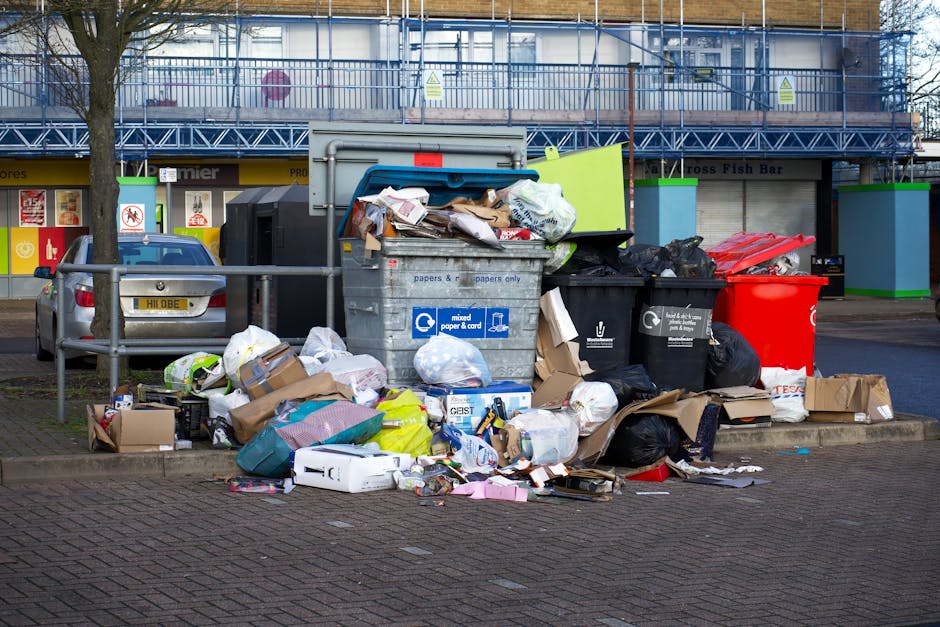
If you are arranging a clearance and the path to the property is awkward, narrow, blocked, or just a bit chaotic, you are not alone. Access problems for Slough rubbish crews come up more often than people expect, and they can affect timing, safety, and sometimes cost. The good news? Most access issues are manageable once they are identified early. In plain English, that means knowing where the crew can park, how far they will have to carry items, whether stairs or gates create problems, and if bulky waste can actually leave the building without damage. This guide breaks it down clearly, so you can plan ahead and avoid that last-minute scramble that nobody enjoys.
We will cover what access problems mean in practice, why they matter, how crews usually work around them, and what you can do to make the job easier. There is also a checklist, a comparison table, and a practical FAQ section for the questions people really ask. Let's make it simpler, because to be fair, rubbish removal is one of those jobs that seems straightforward until the hallway is too tight and the sofa will not budge.
Why access problems matter
Access is one of those behind-the-scenes details that can make a clearance feel smooth or surprisingly difficult. If a crew cannot park close enough, cannot get through a shared entrance, or has to carry heavy items a long way, the job takes longer and becomes more physically demanding. That affects scheduling, crew efficiency, and the level of care needed to protect walls, floors, lifts, stairwells, and door frames.
For households and businesses in Slough, access issues are especially relevant in places like flats, converted houses, office buildings, narrow residential roads, cul-de-sacs, and properties with limited on-street parking. If you have ever watched two people turn a bulky wardrobe sideways in a hallway while someone holds the front door open and mutters "it looked smaller in the room", you will get the picture.
Why does this matter to you? Because access affects more than convenience. It can influence whether the job is safe, whether the right vehicle is used, how many people are needed, and whether items can be removed in one visit or need extra planning. In some cases, poor access may mean a clearance has to be split into smaller trips or handled with specialist equipment.
Practical takeaway: if the crew knows about access issues before arrival, the job is usually faster, calmer, and less likely to run into avoidable delays.
That is also why service pages like flat clearance, house clearance, and office clearance often place such emphasis on planning before the team turns up. Access is not an afterthought. It is part of the job.
How access problems work in a rubbish clearance
In practice, a rubbish crew will usually think about access in layers. First comes the vehicle approach: can they stop near the property, and if not, where is the nearest workable loading point? Then comes the route from the item to the vehicle: stairs, lifts, hallways, garden paths, side entrances, rear alleys, shared corridors, or internal fire doors. Finally, they look at the item itself: is it heavy, awkward, fragile, dirty, or likely to snag on corners?
Access problems are not only about distance. A short walk can still be difficult if the route has steps, tight bends, uneven paving, low ceilings, or soft ground after rain. A small problem on paper can become a real headache with a bulky fridge or a heavy sofa. Truth be told, a lot of the stress comes from people assuming "the crew will just manage". They usually do manage, but planning helps them manage well.
Good crews will often ask a few practical questions in advance. Is there parking right outside? Are there loading restrictions? Are there codes or buzzers for the building? Is the waste on the ground floor or up in the loft? Are there items that need dismantling? Those questions are not fuss. They are the difference between a tidy, efficient job and one that turns into a slow shuffle with a hand truck and crossed fingers.
If you are arranging a wider clearance, access planning also affects services such as waste removal, furniture clearance, and furniture disposal. Different items create different movement challenges, and access determines how each one should be handled.
Key benefits and practical advantages
Sorting access properly is not just about making life easier for the crew. It can genuinely improve the whole experience for the customer too. Here are the main gains.
- Faster completion: when the path is clear and the vehicle can get close, crews can work more efficiently.
- Lower risk of damage: fewer tight squeezes means less chance of scuffed walls, chipped paint, or scratched floors.
- Safer lifting: shorter carry distances and fewer obstacles reduce physical strain.
- Better pricing accuracy: the crew can quote more realistically when they understand the site conditions.
- Less disruption: neighbours, tenants, office staff, or family members experience a smoother visit.
- Fewer surprises on the day: nobody likes a clearance that stalls because a vehicle cannot reach the back entrance.
There is another quiet advantage too: better communication. When access is discussed early, it usually leads to a more professional, reassuring experience. You know what to expect, the crew knows what to bring, and the job feels organised rather than improvised.
For larger or more varied jobs, such as home clearance or builders waste clearance, that planning can make a noticeable difference. Even a small courtyard or an awkward gate can shape the whole workflow.
Who this is for and when it makes sense
This topic matters to almost anyone booking a clearance in Slough, but some people feel the impact more than others. If you are in a top-floor flat, a terraced house with no rear access, a busy office with shared entrances, or a property with narrow driveway space, you will want to think about access before the team arrives.
It also makes sense if you are clearing:
- a property with bulky furniture or multiple large items
- a loft, cellar, garage, or outbuilding
- a commercial unit with loading bay rules or time restrictions
- a garden packed with cuttings, soil, or broken outdoor items
- a flat where parking is tight and lifts are small or shared
Sometimes the issue is less about the property itself and more about the situation. For example, you may be clearing a relative's house while juggling keys, neighbours, and a long list of items. Or you may be trying to clear an office in a hurry before contractors arrive. Access planning becomes useful in both cases because it turns a messy day into something more manageable.
If you are not sure what service fits the job, pages like loft clearance, garage clearance, and garden clearance can help you think through the type of waste involved, which then feeds into the access plan.
Step-by-step guidance
Here is a practical way to handle access problems before a Slough rubbish crew arrives. It is simple, but it works.
- Walk the route from waste to vehicle. Check doors, stairs, gates, lifts, side passages, and any awkward corners. Do not just glance at it. Actually walk it.
- Note where parking is possible. Think about the closest legal and realistic stopping point, not just the ideal one.
- Measure the bulky items. Sofas, wardrobes, mattresses, appliances, and office desks are the usual troublemakers.
- Look for obstacles. Low ceilings, narrow stair turns, garden mud, loose gravel, intercoms, locked communal areas, bins, bikes, and storage clutter can all matter.
- Tell the crew early. Share the honest version. If access is tight, say so. It helps them bring the right kit and plan the route.
- Clear the path where you can. Move shoes, plant pots, boxes, pet gates, and anything that slows the carry.
- Prepare building access details. Codes, keys, concierge arrangements, lift booking times, and loading restrictions should all be ready.
- Confirm what happens if access changes. Sometimes parking is blocked by another vehicle or a lift is out of service. Know who to contact and what the backup plan is.
That last point matters more than people think. Access can look fine at 9 a.m. and become awkward by 10 a.m. because of deliveries, school runs, or a neighbour leaving a car in the one useful spot. Life happens. Better to have a plan B.
If you are booking a more specialised service, such as office clearance or business waste removal, it is especially worth confirming building rules and timings in advance. Commercial properties can be fussier about access than people expect.
Expert tips for better results
In our experience, the best access plans are boringly thorough. That is a compliment. The less exciting the day is, the better it usually goes.
- Send photos from the entrance, staircase, and item stack. A few clear images often explain more than a long message ever could.
- Be honest about the difficult bits. If the only parking is a little way off, say so. If the lift is tiny, say that too.
- Separate items by urgency or size. Put the largest items nearest the easiest exit if possible.
- Ask about disassembly early. Some furniture clears much more easily once it is broken down into manageable parts.
- Check weather and ground conditions. A wet driveway or muddy garden path can slow everything down, especially in the morning.
- Leave enough space to work. Even one extra metre near the door can make a surprising difference.
One small but useful habit: stand where the crew would stand when carrying the item, then look ahead and ask, "Would I want to take this through here?" If the answer is no, there is probably an access issue worth mentioning. Slightly obvious, yes, but it saves grief later.
For services that focus on bulky household items, like house clearance or furniture disposal, this sort of planning can be especially helpful because the biggest problems are often the simplest ones: a corner, a step, a gate, or a parked car in the wrong spot.
Common mistakes to avoid
Most access issues are avoidable, which is the frustrating part. People do not usually forget on purpose; they just underestimate how awkward a property can be once heavy items are involved.
- Assuming "there is probably enough room". Probably is not enough when a wardrobe is involved.
- Forgetting about stairs and landings. The door may fit, but the turn might not.
- Not mentioning restricted parking. A crew that expects to park outside may arrive with the wrong setup.
- Leaving clutter in the access path. Shoes, garden tools, recycling bins, and boxes add up quickly.
- Ignoring building rules. Some blocks have fixed lift hours, concierge sign-in, or no-loading zones.
- Booking too tightly around other contractors. If decorators, electricians, or movers are also on site, access can get messy.
A common one is underestimating how awkward multi-item jobs can be. A single chest of drawers may be fine. Five different items, each slightly too big for the same doorway, is another story. It is a bit like trying to fit the whole weekly shop into one small reusable bag. You can do it once. Maybe. But it is not elegant.
Another mistake is failing to mention access restrictions for specialist clearances like flat clearance or garage clearance. Flats often bring lift and corridor issues, while garages can involve tight angles, low light, and a surprising amount of hidden clutter.
Tools, resources and recommendations
You do not need fancy equipment to plan access well. A few simple tools and habits will do most of the work.
- Phone camera: take photos of entrances, parking areas, stairwells, and the waste itself.
- Tape measure: useful for doors, lift openings, tight corners, and bulky furniture dimensions.
- Site notes: write down codes, parking restrictions, floor numbers, and contact names.
- Marker labels: helpful if different items need different handling or need to stay put until the end.
- Short access checklist: keep it on your phone so you can review it before booking day.
For readers who want to understand the wider service picture, it is also worth looking at pages about pricing and quotes, insurance and safety, and health and safety policy. Those pages support the practical side of booking because access, risk, and pricing are all linked.
You may also find the company background and working approach useful on the about us page. If you want to ask questions before making a booking, the contact us page is the obvious next step. And if you want reassurance about how personal information is handled during enquiries, the privacy policy explains that side of things in more detail.
Law, compliance, standards and best practice
Access problems are not just a practical issue; they can overlap with safety and duty-of-care considerations. In the UK, rubbish removal teams must work safely, avoid damage, and handle waste responsibly. Exact procedures vary by provider and property type, but the general expectation is clear: the job should be planned so people and property are protected as much as possible.
Best practice usually means:
- carrying out a sensible access check before the job
- making sure lifting and carrying is realistic for the team on site
- avoiding unsafe shortcuts through tight or unstable spaces
- protecting communal areas, floors, and door frames where needed
- following building rules, parking restrictions, and site procedures
Where waste transport or clearance is concerned, responsible handling matters as much as speed. That is one reason reputable teams usually pair access planning with their wider operational standards, including safety procedures, insurance, and recycling practices. You can see that approach reflected in pages such as recycling and sustainability and terms and conditions.
There is also a simple common-sense rule that often gets overlooked: if the route is unsafe, it should be changed rather than forced. Nobody benefits from squeezing a heavy item through a passageway that is clearly too narrow. Not worth it, not for the crew and not for the property owner.
Options, methods and comparison table
When access is tight, there are usually a few ways to tackle the job. The right choice depends on item size, building layout, time available, and how much movement is realistic without causing damage.
| Method | Best for | Pros | Limitations |
|---|---|---|---|
| Direct carry-out | Clear ground-floor access, short distances, regular household waste | Fast, simple, low preparation | Not ideal for tight stairwells or blocked entrances |
| Partial dismantling | Bulky furniture, wardrobes, desks, beds | Makes items manageable and safer to move | Can take extra time and may require tools |
| Staged removal | Large clearances, limited parking, busy buildings | Reduces congestion and keeps routes clearer | Needs planning and a little more coordination |
| Special access route | Rear alleys, side gates, loading bays, service lifts | Can be the safest and most efficient option | Depends on permissions, timings, and route size |
For many jobs, the answer is a combination of methods rather than just one. A wardrobe may be dismantled, a pile of smaller items carried directly, and garden waste moved through a side gate. Real-world clearances are rarely neat. A bit like moving house, actually. Everything sounds simple until you start touching it.
Case study or real-world example
Imagine a two-bedroom flat in Slough with a shared entrance, a lift that is technically available but quite small, and a resident parking bay that is often occupied by visitors. The customer needs a sofa, a mattress, a chest of drawers, and several bags of mixed household rubbish removed. On paper, it sounds straightforward.
But once the team arrives, they find the lift cannot comfortably take the sofa. The hallway turn is tighter than expected, and the nearest legal parking space is a short walk away. If nobody had discussed access beforehand, the job could have become slow and stressful very quickly.
Now picture the same job handled properly in advance. The customer shares photos of the staircase, the lift dimensions, and the parking layout. The team brings the right equipment, plans for a carry from the nearest practical bay, and arrives ready to dismantle the sofa if needed. The result is not dramatic. That is the point. The job gets done cleanly, without a lot of drama or damage.
That same approach works for commercial clearances too. An office on an upper floor with lift booking times and corridor restrictions benefits from the same preparation, especially if the team is handling desks, chairs, and filing items. For more business-focused jobs, business waste removal is often part of the wider planning conversation.
Practical checklist
Use this checklist before the crew arrives. It is short, but it catches most of the usual problems.
- Have I described the access route clearly?
- Have I mentioned any stairs, narrow doorways, lifts, or shared entrances?
- Do I know where the crew can park or load?
- Have I warned them about parking restrictions or building access codes?
- Are the biggest items measured or photographed?
- Have I cleared shoes, bins, boxes, and clutter from the route?
- Do I know whether anything needs dismantling first?
- Have I told the crew about fragile floors, new paint, or awkward surfaces?
- Is someone available on the day if the crew needs a quick decision?
- Have I checked whether the building has time restrictions or lift booking rules?
If you can tick most of those off, you are in pretty good shape. And if you cannot, that is fine too. Better to find out before collection day than while someone is wedged halfway through a staircase muttering under their breath.
Conclusion
Access problems for Slough rubbish crews are usually manageable, but only if they are handled early and honestly. The main idea is simple: look at the route, check the parking, think about the size of the items, and give the crew the real picture. That small bit of preparation can save time, reduce stress, and help protect both people and property.
Whether you are arranging a flat clearance, house clearance, garden clearance, or office clearance, access is one of the most useful things you can get right. It is not glamorous. It will not win any awards. But it makes the whole job feel calmer and more professional, and that matters more than people usually admit.
Get a free quote today and see how much you can save.
When the access plan is clear, the rest of the day tends to flow. Nice and simple, ideally.
Frequently Asked Questions
What are the most common access problems for rubbish crews in Slough?
The most common issues are limited parking, narrow hallways, tight staircases, small lifts, locked communal entrances, and long carry distances from the property to the vehicle.
Should I tell the crew about access problems before the booking?
Yes. It is always better to mention access issues early so the team can plan properly, bring the right tools, and avoid delays on the day.
Do access problems usually change the price?
They can, depending on how much extra time, labour, or equipment is needed. A good quote should reflect the site conditions fairly, not just the waste volume.
What if my flat has a tiny lift?
Tell the crew the lift size, whether it is working, and whether large items can fit inside. If not, they may need to use stairs or dismantle bulky furniture first.
Can rubbish crews work around no-parking zones?
Often, yes, but they need to know in advance. If parking is restricted, the team may need to use a legal loading point or allow extra carrying time.
What should I measure before the crew arrives?
Measure door widths, stair turns, lift openings, and large items such as sofas, wardrobes, beds, and desks. Even rough measurements are better than none.
Is it okay if the route is cluttered?
It is better to clear the route first if you can. Small items like shoes, bins, and boxes can slow things down or create trip risks.
Do access issues matter more for office clearance or house clearance?
Both can be affected, but office clearance often has more building rules, shared areas, and time restrictions, while house clearance may involve stairs, narrow rooms, or garden access.
What happens if access turns out to be worse than expected on the day?
The crew may adjust the method, remove items in smaller sections, dismantle bulky pieces, or reschedule part of the work if the access problem is severe.
Should I mention garden access and side entrances?
Absolutely. Garden gates, muddy paths, loose paving, and side alleys can all affect how safely waste can be moved out.
Where can I find more information before booking?
Helpful pages include pricing and quotes, insurance and safety, and recycling and sustainability. They give useful context on how bookings are handled.
How can I make a clearance quicker with awkward access?
Clear the route, share photos, measure bulky items, and be upfront about parking or entrance restrictions. That is usually the fastest way to make a difficult site feel manageable.
Is it worth booking a specialist service for difficult access?
If the access is very tight, the items are bulky, or the building has strict rules, a more tailored clearance approach is usually worth it. It can reduce hassle and lower the chance of damage or delay.