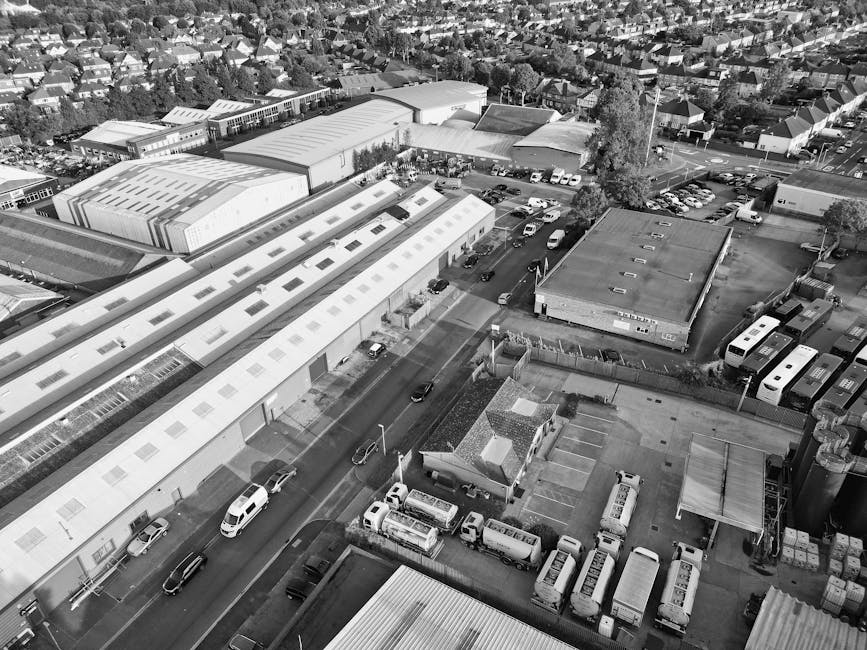
Slough Trading Estate bulky rubbish collection for businesses
If you run a business on or around Slough Trading Estate, bulky rubbish has a habit of building up quietly and then all at once. Old desks, broken shelving, packaging pallets, display fixtures, office chairs that have seen better days, the awkward stuff that does not fit in a normal bin. Before long, it is in the way, it slows the team down, and it can make even a tidy workplace feel cluttered.
This guide explains Slough Trading Estate bulky rubbish collection for businesses in plain English: what it means, how the service usually works, who needs it, what to check before booking, and how to avoid common headaches. You will also find practical steps, a comparison table, a checklist, and answers to the questions people genuinely ask when they are trying to get rid of bulky commercial waste without drama. To be fair, that is usually the whole point.
Along the way, where it helps, you will also find internal links to related services and useful pages on this site, including commercial waste removal, office clearance, warehouse clearance, and same-day rubbish collection. Those pages can be a sensible next step if you are comparing options or need a broader clearance rather than just one bulky pickup.
Table of Contents
- Why Slough Trading Estate bulky rubbish collection for businesses Matters
- How Slough Trading Estate bulky rubbish collection for businesses Works
- Key Benefits and Practical Advantages
- Who This Is For and When It Makes Sense
- Step-by-Step Guidance
- Expert Tips for Better Results
- Common Mistakes to Avoid
- Tools, Resources and Recommendations
- Law, Compliance, Standards, or Best Practice
- Options, Methods, or Comparison Table
- Case Study or Real-World Example
- Practical Checklist
- Conclusion
- Frequently Asked Questions
Why Slough Trading Estate bulky rubbish collection for businesses Matters
Bulky waste is not just a tidying job. On a busy trading estate, it can affect how a site works day to day. A stacked corridor, a blocked loading bay, or a room full of old fixtures can slow staff down, create trip hazards, and make it harder to present a professional image to clients, tenants, or visiting contractors. And yes, it can be one of those jobs that people keep stepping around until it becomes impossible to ignore.
Slough Trading Estate is home to a wide mix of operations: offices, logistics firms, light industrial units, trade counters, storage spaces, and mixed-use sites. That means bulky rubbish can come from very different sources. One business may be clearing out a reception area after a refit. Another may be getting rid of broken racking, surplus stock cages, or worn-out furniture after a move. A third may simply need a one-off pickup after a busy period that left no time for waste management. Different problem, same outcome: you need it gone properly.
For businesses, bulky rubbish collection matters because it helps keep operations moving. It can also reduce disruption compared with doing everything in-house, especially if you do not have the right vehicle, labour, or loading access. On estates like Slough, where time on site may be tightly planned, that practical convenience is often the deciding factor.
Expert summary: The best bulky waste collection is not just about lifting heavy items. It is about keeping your site safe, avoiding avoidable delays, and making sure waste leaves in a controlled, traceable way.
If your project includes a larger commercial clear-out rather than a few items, it may also be worth looking at business rubbish removal or industrial waste removal to see which approach fits the job best.
How Slough Trading Estate bulky rubbish collection for businesses Works
In most cases, bulky rubbish collection is straightforward, but the details matter. A business books a collection, explains what needs removing, and gets a quote or estimate based on volume, item type, access, and labour required. The team then arrives, loads the items, and removes them for responsible processing.
That sounds simple enough. In real life, though, there are a few moving parts. Is the waste on the ground floor or up a flight of stairs? Can a truck stop near the unit, or does the waste need to be carried across a yard? Are the items clean, broken, mixed with general rubbish, or partially dismantled? The better the information upfront, the smoother the collection tends to be. Truth be told, this is where a five-minute conversation can save a twenty-minute delay later on.
Typical bulky items businesses ask to remove
- Office desks, chairs, filing cabinets, and pedestals
- Reception furniture and showroom displays
- Warehouse shelving, pallets, and light racking components
- Broken appliances and non-hazardous equipment
- Packaging bulk, broken crates, and oversize sacks
- Old fixtures and fittings after a refit or relocation
The collection itself is usually planned around access and volume. That means a small van load, a partial load, or a full load can all be viable depending on the amount of material. If the job is more than a one-off pickup, a wider programme of office clearance or house clearance style removal may be more efficient, especially where mixed contents need separating before disposal.
Many businesses also prefer same-day or next-day availability when they are working to a move-out deadline, a landlord handback, or an audit date. In those cases, the practical value is not just removal; it is timing. Waiting three days when the floor must be clear by lunchtime? That is the sort of detail that suddenly matters a great deal.
Key Benefits and Practical Advantages
The obvious benefit is space. Once bulky items are gone, a unit feels calmer, safer, and easier to work in. But the real value goes beyond that. A well-run collection can also protect staff time, reduce manual handling risk, and keep a project from spiralling into a longer cleanup than anyone expected.
What businesses usually gain
- Less disruption: the right team removes heavy items quickly, often in one visit.
- Better safety: fewer trip hazards, less clutter, and less risky moving around tight spaces.
- More predictable costs: a clear quote is often easier to manage than hiring multiple vehicles or labour.
- Cleaner handovers: especially useful for lease returns, fit-outs, and end-of-project clearances.
- Improved appearance: important if clients, landlords, or inspectors are visiting.
There is also a morale angle people sometimes overlook. Staff work differently in a tidy environment. It is a small thing, but an uncluttered unit often feels easier to manage. Less rummaging, less awkward stepping around old furniture, less of that "we should really sort this out" feeling hanging in the air.
For businesses that produce regular mixed waste as well as occasional bulky items, combining a one-off clearance with a longer-term waste plan can make sense. You might want to compare this with commercial waste removal or the broader approach to industrial waste removal if the site has ongoing output rather than a single clear-out.
Who This Is For and When It Makes Sense
This service is a good fit for any business that needs large, awkward, or heavy items removed without turning the day into a manual-handling project. On Slough Trading Estate, that usually includes small offices, trade units, warehouses, storage businesses, retail operations, and industrial premises with mixed waste streams.
Common situations where bulky collection makes sense
- After an office refit or refurb
- Before or after a business move
- When broken furniture is taking up valuable floor space
- After clearing redundant stock, shelving, or fixtures
- At the end of a lease, when a unit needs to be handed back clean
- When a site has no easy way to load large items into a vehicle
It also makes sense when your team can probably move the items, but should not really be doing it. That distinction matters. Just because two people can drag a filing cabinet to the door does not mean they should be doing repeated lifts all afternoon. Sometimes the sensible choice is also the safer one.
If your clearance includes a whole room, multiple floors, or a large number of mixed items, it may be better to book an office clearance or warehouse clearance rather than a simple collection. That can reduce the number of visits and give you a cleaner end result.
Step-by-Step Guidance
If you want a smooth collection, the process is usually easier than people expect. The trick is preparing properly before anyone arrives. Here is a practical way to handle it.
- List everything that needs removing. Be specific. "Old office stuff" is too vague. "Six desks, twelve chairs, one copier, and a stack of dismantled shelves" is much more useful.
- Separate bulky items from general rubbish. This helps the crew estimate labour and loading time.
- Check access. Note stairways, lifts, narrow corridors, loading restrictions, and parking limitations.
- Flag anything unusual. Heavy equipment, glass, awkward shapes, or items that may need dismantling should be mentioned early.
- Ask how the waste will be handled. A proper provider should explain what happens after collection and whether any items can be reused, recycled, or need special treatment.
- Schedule the pickup around your operation. Choose a time that avoids customer traffic, deliveries, or critical shift changes where possible.
- Walk the route before collection day. A quick look at access points can reveal issues you would rather know about now than at 9:15 on a Monday morning.
A small tip from real-world experience: if you can photograph the pile from a few angles, you usually get a better estimate faster. Not every job needs that, but it helps when items are mixed or tucked behind other stock. A photo often tells the story better than three emails and a hopeful sentence or two.
For larger or more complex clearances, it can be useful to speak to a team that already handles same-day rubbish collection or wider business rubbish removal so they can advise on the most efficient approach.
Expert Tips for Better Results
There are a few practical habits that make bulky rubbish collection easier, quicker, and usually cheaper than leaving everything to the last minute. None of them are flashy, but they work.
Tips that genuinely help
- Group items by type. Furniture in one area, equipment in another, and loose materials elsewhere.
- Dismantle what you safely can. Flat-pack desks, separated shelving, and folded display units often load faster.
- Keep a clear path. Even a small obstruction near the door can slow the whole job.
- Be honest about heaviness. A cabinet that looks manageable may be much heavier than it appears. Happens all the time.
- Plan around busy periods. A 30-minute collection can become awkward if it lands in the middle of deliveries.
- Label what must stay. If the site is active, mark keep items clearly so nothing gets moved by mistake.
Another sensible move is to consider whether the bulky waste is part of a larger workflow issue. If clutter keeps appearing in the same corner or store room, that is often a sign that the site layout needs adjusting, not just removing. A tidy pickup is good. Preventing the pile-up is better.
For teams dealing with repeated clear-outs or mixed use premises, a broader service such as warehouse clearance may be the stronger long-term option than arranging occasional ad hoc pickups.
Common Mistakes to Avoid
A lot of bulky waste problems are self-inflicted, to be fair. Nothing dramatic, just the usual rush, assumptions, and "we thought it would fit" moments. Here are the most common mistakes businesses make.
- Underestimating volume: A pile that looks small from one angle can take much longer to clear than expected.
- Leaving access details until the day: Loading bays, security rules, and parking constraints should be discussed early.
- Mixing different waste types without saying so: This can affect handling and pricing.
- Assuming all bulky items are simple general waste: Some items need special care, and the provider should know about them.
- Forgetting to check internal responsibilities: Landlords, managing agents, or tenants may each have different expectations on handback.
- Booking too late: Last-minute requests are possible, but they leave less room for careful planning.
The biggest mistake, though, is treating bulky rubbish as a side task rather than a proper operational job. A small delay in disposal can interfere with movers, cleaners, decorators, and stock teams. Once one part slips, the dominoes begin. Not ideal.
Tools, Resources and Recommendations
You do not need a huge toolkit to organise bulky rubbish collection well, but a few simple resources make the process cleaner and less stressful.
Useful things to have ready
- A rough item list with quantities
- Photos of the waste and access route
- Site contact details for the day of collection
- Any access instructions, security steps, or parking notes
- Measurements for oversized items if they are awkward to move
- A note on whether the clearance is part of a larger office or warehouse project
It also helps to know which service matches the job. A one-off collection suits a small batch of bulky items. A broader fit-out clear-out may need office clearance. A storage or stock area might call for warehouse clearance. If the task is time-sensitive, look at same-day rubbish collection so you can keep the project moving.
And if you are still deciding how much of the site needs to go, a wider commercial waste removal plan can be a useful benchmark. Sometimes the right answer is not a single pickup but a tidy, staged clearance over a short period.
Law, Compliance, Standards, or Best Practice
For business waste in the UK, compliance is not something to wave away. You do not need to become a legal specialist, but you do need to take waste duties seriously and use a provider that understands the basics of lawful handling, transfer, and disposal.
In practical terms, businesses should make sure waste is passed to a properly authorised carrier and that there is a record of what has been collected. The details can vary by situation, but the principle is simple: if the waste leaves your site, you should know who took it and how it was handled. That is good practice and a sensible safeguard.
Bulky waste can also create health and safety concerns on site. Manual handling, sharp edges, trapped items, unstable stacks, and blocked walkways are all familiar hazards. If items are awkward or heavy, staff should not be expected to wrestle with them just to save time. Better to plan the removal carefully than risk a back injury or a dropped item near a loading area.
For businesses on Slough Trading Estate, best practice usually includes:
- clear item identification before collection
- safe access and agreed loading points
- separation of general bulky items from any special waste streams
- documented handover or transfer details where appropriate
- attention to site rules, permits, and tenant obligations
If you are unsure whether a particular item can be taken with ordinary bulky waste, ask first. It is always easier to sort that out before collection than after a truck is already on the estate. That bit saves everyone a headache.
Options, Methods, or Comparison Table
Different businesses need different removal methods. A quick comparison helps when you are deciding what is most sensible for the job at hand.
| Option | Best for | Advantages | Possible drawbacks |
|---|---|---|---|
| Bulky rubbish collection | A small to medium number of large items | Quick, targeted, often ideal for one-off clear-outs | Less efficient if you have a whole unit to clear |
| Office clearance | Desks, chairs, cabinets, and mixed office contents | Better for refits, moves, and full office spaces | May be more than you need for a simple pickup |
| Warehouse clearance | Shelving, stock areas, storage units, and larger industrial spaces | Handles bigger volumes and more complex access | Usually requires more planning |
| Same-day rubbish collection | Urgent, time-sensitive removals | Fast response, helpful for deadlines | Availability may depend on timing and location |
The right choice depends less on the label and more on the shape of the job. If you are removing five old chairs, a single bulky collection may be perfect. If you are stripping out a whole mezzanine office, you probably want a fuller clearance service instead. Simple enough, really.
Case Study or Real-World Example
Imagine a small logistics office on Slough Trading Estate that has just completed a layout change. The team has several unwanted desks, a couple of damaged task chairs, a broken reception unit, and a stack of old shelving from a back room that has become a bit of a dumping ground. Nothing hazardous, but enough to make the unit feel cramped and untidy.
At first, the plan is to ask staff to move it all themselves. That works on paper. Then the realities kick in: limited parking near the unit, a narrow route past stock cages, and a clock ticking toward the afternoon delivery window. Suddenly the "quick job" is not so quick.
Instead, the business books a bulky collection, sends photos in advance, and flags the access route. On the day, the collection is done in one visit, the floor is clear for the next stage of the refit, and the team can get back to normal work without a half-finished pile in the corner. Nothing flashy. Just a tidy result and a calmer afternoon.
That kind of outcome is common. The biggest win is not only the removal itself, but the fact that everyone can move on with the project instead of circling the same clutter for another week.
Practical Checklist
Use this simple checklist before booking a collection. It saves time and reduces back-and-forth.
- Have I listed every bulky item that needs removing?
- Do I know roughly how many items or how much space they take up?
- Have I checked access, parking, and any site restrictions?
- Are there stairs, lifts, or narrow doorways involved?
- Do any items need dismantling before collection?
- Have I separated general bulky waste from anything unusual?
- Do I know who will meet the crew on site?
- Have I chosen a time that avoids peak business activity?
- Do I need a broader service such as office or warehouse clearance?
- Have I confirmed what happens after the waste is collected?
Quick takeaway: the better the prep, the smoother the collection. Most delays are not caused by the rubbish itself; they come from unclear access, vague descriptions, or items being left until the last possible minute.
Conclusion
Slough Trading Estate bulky rubbish collection for businesses is really about making a messy job manageable. Whether you are clearing out a unit after a refit, getting rid of damaged furniture, or simply reclaiming space that has been eaten up by old stock and fixtures, the right service saves time and keeps the site workable.
Plan the collection properly, describe the waste clearly, and match the service to the size of the job. That combination usually leads to the least fuss and the best result. And honestly, in a busy trading estate, less fuss is worth a lot.
If you are comparing your options now, take the next step while the job is fresh in your mind. The sooner you map out what needs removing, the easier it is to book the right service and avoid unnecessary delays.
Get a free quote today and see how much you can save.
Sometimes the simplest thing is just clearing the space and letting the site breathe again. It makes a difference.
Frequently Asked Questions
What counts as bulky rubbish for a business?
Bulky rubbish usually means large or awkward items that are too big for normal commercial bins. That can include desks, chairs, cabinets, shelving, display units, appliances, and other oversize non-hazardous waste.
Can you collect bulky rubbish from a unit on Slough Trading Estate?
Yes, bulky items can usually be collected from business premises on the estate, provided access, item type, and site arrangements are suitable. It helps to give clear details before the visit so the job can be planned properly.
Do I need to dismantle furniture before collection?
Not always. Some items can be collected as they are. If you safely dismantle furniture beforehand, it may save time, but it is not essential in every case. If something is awkward or heavy, mention it early.
Is same-day bulky rubbish collection available?
In many cases, urgent collection can be arranged, depending on availability and the size of the job. If timing is tight, it is best to ask as early as possible so the schedule can be checked.
How do I know whether I need office clearance instead?
If you are removing several rooms of furniture, mixed contents, or a full workspace rather than a few items, office clearance is often the better fit. It is usually more efficient for larger, broader clear-outs.
Can warehouse waste be included in the same collection?
Sometimes, yes, but it depends on the type of waste and the layout of the site. For larger storage or industrial spaces, a warehouse clearance service may be more suitable than a simple bulky pickup.
What should I tell the collection team before they arrive?
Share the type of items, approximate quantity, access details, parking instructions, and any special concerns such as stairs, narrow corridors, or heavy pieces. A few clear notes can save a lot of time on the day.
Will my business waste be handled responsibly?
A proper provider should remove waste in line with accepted UK business waste practices and explain how it will be managed after collection. It is reasonable to ask what happens next and how the transfer is recorded.
What if I only have a few large items?
That is often exactly what a bulky rubbish collection is for. If you only have a handful of oversized items, a focused pickup is usually more practical than arranging a full clearance.
How can I make the collection cheaper or more efficient?
Be accurate about the load size, group items together, clear the access route, and remove anything you want to keep. When the team can get in, load, and leave without delays, the whole job tends to run more smoothly.
Is it okay to mix office furniture with other commercial waste?
Sometimes mixed loads are fine, but it depends on the material and how the waste will be handled. If there is a mix of furniture, packaging, and other general business waste, describe everything clearly before booking.
What is the biggest mistake businesses make with bulky waste?
The most common mistake is waiting too long and then trying to solve the problem in a rush. That often leads to poor access planning, missed deadlines, and more disruption than needed. A little preparation goes a long way.
Do I need a broader clearance service for a full unit?
If you are clearing a large space, such as an entire office, stockroom, or industrial area, a broader clearance service is usually more efficient. It depends on the scale, but full-site jobs rarely behave like simple one-item pickups.