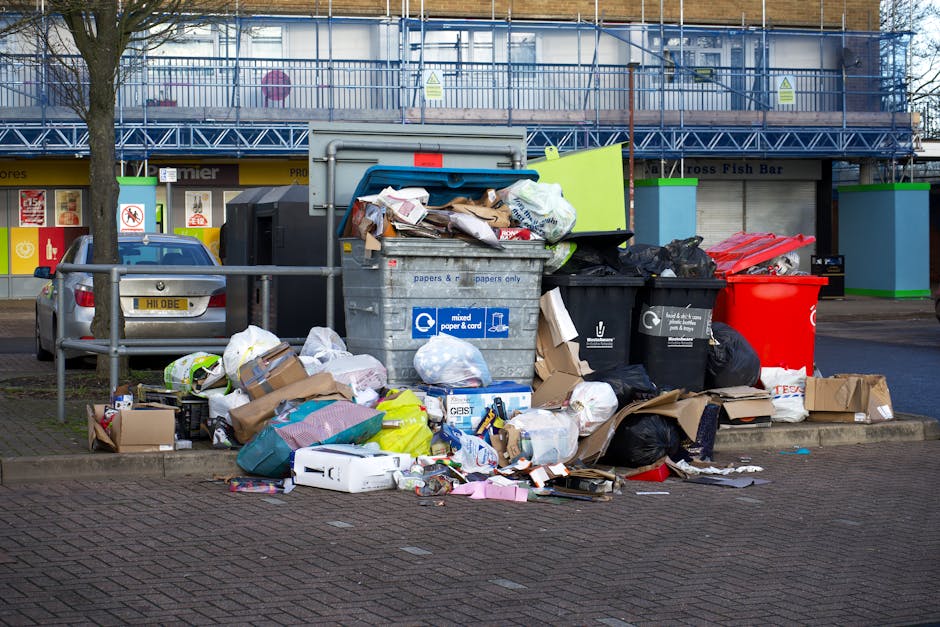
Slough Borough Council rules for bulky rubbish collection: what residents should know before booking
If you have a broken wardrobe leaning in the hallway, an old mattress taking up a spare room, or a sofa that will not fit through the lift, bulky rubbish collection suddenly becomes very real. The Slough Borough Council rules for bulky rubbish collection matter because they affect what can be taken, how you book it, where you leave items, and whether your waste is handled properly. Get those details right and the job is straightforward. Get them wrong and you can end up with delays, rejected items, or a mess on the pavement. Not ideal, to be fair.
This guide breaks the process down in plain English. You will learn how bulky waste collection usually works, what residents should check before booking, common mistakes to avoid, and when a private clearance option may be the better fit. If you need a broader clearance service for a home, flat, garage or loft, it also helps to understand the difference between council collection and more flexible removal services like house clearance or furniture disposal.
Quick takeaway: bulky rubbish collection is best treated as a planned service, not a last-minute dump-and-run. Check the council's current booking rules, item limits, and placement instructions before you move anything outside.
Why Slough Borough Council rules for bulky rubbish collection Matters
Bulky waste is different from your normal weekly bin collection. It tends to be larger, heavier, awkward to move, and often made of mixed materials like wood, foam, fabric, and metal. That mix is exactly why councils set rules around collection. They need to keep crews safe, avoid damage to pavements and communal areas, and make sure recyclable materials are separated where possible.
For residents, the rules matter for a very simple reason: they tell you what the council can actually take. A lot of people assume bulky collection means "anything big" and that is where the trouble starts. A mattress, yes. A large sheet of plasterboard? Probably not. A dismantled wardrobe? Sometimes. A bag of random items left with it? Usually not. The more mixed and unclear the pile, the more likely the collection gets rejected.
It also matters because bulky waste often comes up during life admin moments that are already a bit fraught. A rental move. A bereavement. A declutter before a baby arrives. A burst of home renovation. In those moments, the last thing you want is to be wrestling with unclear rules on a Friday afternoon while the rain is coming in sideways. We have all had those weeks.
There is also a wider environmental point. Bulky items can often be reused, repaired, or recycled in parts, rather than simply thrown away. That is why responsible disposal matters. If you are dealing with a larger clear-out, it may be worth looking at the council option alongside local services that focus on reuse and recycling, such as recycling and sustainability.
How Slough Borough Council rules for bulky rubbish collection Works
While exact procedures can change, the general flow for a council bulky waste collection in the UK is usually similar. You check what items are accepted, book the collection in advance, pay any applicable fee, and place the items out according to the instructions you were given. Simple on paper, slightly more fiddly in real life.
In practice, the council is likely to expect items to be:
- safe for collection crews to handle
- listed clearly when you book
- separated where possible so the crew knows what is being taken
- placed in the agreed location at the correct time
Many councils also set limits on the number of items, the size of individual pieces, or the type of waste they will collect. That means it is worth planning before you start dragging a heavy sofa into the front garden and then discovering it is outside the service terms. A bit annoying, yes, but avoidable.
If you are unsure whether your waste is bulky household rubbish or something more specialised, think about the category rather than the size alone. A broken dining table is a furniture item. A pile of old soil bags from the garden is another matter entirely. That could be closer to a different waste stream, where a dedicated garden clearance or general waste removal service may be more appropriate.
Most councils also want items presented neatly. That normally means no hidden surprises inside drawers, no loose sharp edges if they can be safely secured, and no extra waste "parked" beside the main item. A flat-packed bed frame and a mattress can be two separate items; a bed frame with screws, bedding, and a random chair piled on top is a different story.
Key Benefits and Practical Advantages
Using the council's bulky rubbish collection service can make sense for a lot of everyday situations. It is not always the fastest route, but it can be a sensible one if you only have a few items and do not need a full clearance.
- Convenience for single or small loads: If you only have one sofa, two chairs, or a mattress, a booked collection may be enough.
- Less heavy lifting for you: You do not need to hire a van or spend half the morning trying to wedge a wardrobe into the car.
- Clearer disposal route: The council process gives you a defined booking and collection window, which can be useful if you are coordinating a move or a repair.
- Potential environmental benefit: Councils generally route waste through approved disposal or recycling processes, which helps reduce fly-tipping risks.
- Good fit for planned decluttering: It works particularly well if you have time to prepare the items properly.
The biggest advantage is predictability. Once the booking is accepted, you know what day you are working to. That can be strangely comforting when your hallway already looks like a small furniture warehouse.
For bigger jobs, though, you may need something more flexible. A whole-house move-out, deceased estate, or end-of-tenancy clearance often involves more than a few bulky pieces. In that case, services such as home clearance, flat clearance, or furniture clearance may be a better fit because they can deal with mixed loads and awkward access.
Who This Is For and When It Makes Sense
This topic is relevant if you are a Slough resident or property occupier with items too large for normal household bins. That usually includes people in houses, flats, maisonettes, shared properties, and rental homes where bulky items build up over time.
It is especially useful for:
- people replacing old furniture
- tenants clearing out before moving
- landlords preparing a property for re-let
- families managing a larger declutter
- homeowners dealing with attic, garage, or spare-room overflow
- small businesses disposing of broken office furniture, if a domestic route is not appropriate
Sometimes the sensible decision is not the council collection at all. If you have several pieces, the property has stairs or no lift, or you need same-week removal, a private clearance may save time and stress. That is particularly true for awkward items such as old wardrobes, filing cabinets, or mixed furniture from an office move. In those cases, looking at office clearance or business waste removal may make life easier.
Truth be told, the "best" option is usually the one that fits your actual situation, not the cheapest option on paper.
Step-by-Step Guidance
If you are trying to follow the Slough Borough Council rules for bulky rubbish collection without making a mess of it, use this practical sequence. It keeps the process calm and reduces the chance of a rejected collection.
- List every item clearly. Write down what you want collected and count it properly. A sofa and a footstool are not the same thing, and councils often want item counts rather than vague descriptions.
- Check whether each item is accepted. Some waste is bulky but not suitable for council collection. Mixed building waste, hazardous materials, or loose rubble may need another route, such as builders waste clearance.
- Measure awkward items. If you have a long wardrobe or a heavy corner sofa, check whether it can be moved to the agreed collection point safely. Narrow hallways have a way of exposing optimism.
- Book in advance. Do not leave it until the day before you need the space. Council services can be busy, especially around bank holidays and moving season.
- Follow placement instructions exactly. Put the items where the council asks. That may be at the kerbside, by the property boundary, or in a shared collection point.
- Remove personal items. Empty drawers, pockets, and storage compartments. It sounds obvious, but people do forget keys, photos, USB sticks, and the odd tenner.
- Keep the area accessible. Make sure crews can reach the waste without tripping hazards, parked cars, or locked gates.
- Keep your booking details handy. If the council needs clarification, you will be glad you kept the reference and item list together.
If your pile is more of a whole-room clear-out than a handful of objects, it may be better to combine services. For example, a garage that contains old chairs, broken shelving, and garden debris may call for garage clearance plus a separate disposal route for the garden material. Mixing everything together can look efficient, but it often complicates collection.
Expert Tips for Better Results
A few small habits can make a bulky collection much smoother. None of them are glamorous, but they save time.
- Disassemble what you safely can. A dismantled bed frame is usually easier to move than a full frame. Keep screws and fittings in a bag taped to the item if appropriate.
- Sort reusable from broken. If a chair could be reused, it may be better handled through a clearance route that focuses on furniture recovery rather than pure disposal.
- Stage items neatly. Crews respond better to an organised pile than a random heap. It also reduces the chance of something being overlooked.
- Think about access first. If a bulky item needs to pass through tight doors or communal corridors, plan how it will get out before collection day arrives.
- Photograph the load. A quick photo helps if you later need to check what was left out or confirm what should have been taken.
- Separate hard materials from soft furnishings. This can matter where recycling or disposal routes differ.
One practical little trick: place a note on the front item count if there are several pieces. It sounds a bit fussy, I know, but it can help everyone stay aligned, especially in shared properties where one person's "one pile" is another person's "three different jobs".
If you are collecting items from a loft or upper floor, use caution. Heavy furniture on stairs is where minor jobs turn into awkward ones. A dedicated loft clearance can be far less stressful than trying to improvise on your own.
Common Mistakes to Avoid
Most collection problems are boringly preventable. The issue is usually not the council service itself, but how the waste is prepared.
- Leaving the booking too late: People often discover the item on a Sunday and need it gone by Monday. That rarely ends well.
- Mixing prohibited items with bulky waste: One wrong item can lead to refusal or require a separate disposal arrangement.
- Not counting items properly: If the booking is for two items and you present four, you may face issues.
- Blocking access: A collection point that looks tidy to you may still be inaccessible to the crew.
- Overfilling communal areas: In flats, leaving waste in shared hallways can create complaints or safety problems.
- Assuming the council will take everything: Bulky waste is not the same as general junk. Different waste types need different handling.
One of the biggest mistakes is treating bulky rubbish like a free-for-all. It is not. The rules exist for a reason. They protect people, property, and the route the waste takes afterwards. A little planning avoids the awkward "sorry, we can't take that" moment at the kerb.
Tools, Resources and Recommendations
You do not need fancy equipment, but a few simple tools make the job easier:
- Tape measure: useful for checking whether furniture will fit through doorways or down stairwells
- Marker pen and tape: good for labelling parts if you dismantle furniture
- Strong gloves: helpful for moving broken timber or items with rough edges
- Dust sheets or old blankets: useful when dragging items through internal spaces
- Camera phone: handy for keeping a record of what was booked
- String, straps, or bags: helpful for bundling small components safely
It can also help to compare the council option with private clearance before you book. If you only have one or two pieces, council collection may be fine. If the job has grown into a larger declutter, a service that handles furniture and mixed waste together may save you repeated lifting. That is where furniture clearance or house clearance becomes genuinely useful.
If you want to understand how a local clearance company structures its service, have a look at about us and pricing and quotes. Those pages can help you judge whether a private option is worth comparing alongside the council route.
Law, Compliance, Standards, or Best Practice
Bulky waste disposal sits within the wider UK expectation that waste should be stored, transported, and disposed of responsibly. Even if you are only dealing with a sofa and a table, the same basic principle applies: you should not leave waste where it creates a hazard, a nuisance, or an illegal fly-tipping risk.
From a practical standpoint, the main compliance points for residents are usually these:
- Use the correct collection route: household bulky waste should go through an approved route, not a roadside dump or a neighbour's bin.
- Do not present unsafe items: anything containing sharp, leaking, or contaminated material may require special handling.
- Follow instructions exactly: councils and contractors may refuse collections if items are not listed correctly or are left in the wrong place.
- Keep shared areas clear: in flats and maisonettes, clutter in corridors or near exits can create fire and trip hazards.
If you are arranging a clearance that involves work at height, heavy lifting, or awkward access, it is sensible to think about safety first and convenience second. That is not being dramatic, just practical. A wobbly wardrobe on a stair landing is nobody's friend.
For private removal work, it is also wise to check the provider's safety approach. Pages such as health and safety policy and insurance and safety are there for a reason: they show how the company thinks about risk, handling, and responsibility. If a provider cannot explain that clearly, I would be cautious.
Options, Methods, or Comparison Table
Different waste situations need different solutions. The table below gives a simple comparison to help you decide what fits best.
| Option | Best for | Strengths | Limitations |
|---|---|---|---|
| Council bulky rubbish collection | One-off household bulky items | Simple booking, suitable for small loads, familiar public service | May have item limits, access rules, and narrower accepted item types |
| Private furniture removal | Single or multiple furniture pieces | Often more flexible, can help with awkward access, good for mixed furniture | May cost more depending on load and urgency |
| House or flat clearance | Full room, flat, or house declutter | Handles larger jobs, useful for multiple categories of waste | More involved than a simple bulky collection |
| Garage or loft clearance | Stored clutter, old appliances, stacked household goods | Good for hard-to-reach areas and mixed contents | Usually not needed for a single item |
| Builders waste clearance | Post-renovation waste | Better for rubble, timber, and construction leftovers | Not the right route for normal household bulky items |
In plain terms: if your job is "one sofa and a mattress," the council route may be enough. If your job is "the entire spare room plus the shed plus half the loft," you are probably in clearance territory.
Case Study or Real-World Example
A common scenario goes like this. A couple in Slough decides to replace their old bedroom furniture after years of putting it off. The wardrobe is scratched, the bed frame is tired, and the mattress is well past its best. At first, they think they will just book a bulky collection and be done with it. Then they realise the wardrobe needs dismantling, the drawers are stuffed with random cables and paperwork, and there is also an old broken chair in the corner. Classic.
At that point they have two choices. They can keep the job small by separating the accepted bulky items and leaving out anything that does not fit the council rules. Or they can switch to a broader removal option that covers the whole room in one visit. In many cases, the second route ends up being less stressful, especially if access is tight or time is short.
That is exactly why it helps to think about the full picture before booking. A narrow focus on one item often misses the real job, which is usually the mess around the item rather than the item itself.
For example, if the furniture is from a rented flat, a service such as flat clearance may be more appropriate. If it came from a whole property declutter after redecorating, home clearance may be the calmer choice. Not exciting, but very effective.
Practical Checklist
Use this checklist before you book or place bulky waste out for collection.
- Confirm what items you want removed
- Check that each item is accepted under the council's current rules
- Count the items carefully
- Measure large or awkward pieces
- Remove personal belongings from drawers, shelves, and pockets
- Check access for the crew
- Book in advance and note the collection date
- Place items exactly where instructed
- Keep other waste separate
- Take a photo of the items before collection if helpful
Useful extra check: if the load includes mixed furniture, garden debris, or building leftovers, stop and re-classify the job before booking. That small pause can save a lot of frustration later.
Conclusion
Slough Borough Council rules for bulky rubbish collection are there to make disposal safe, predictable, and manageable for everyone involved. Once you understand what counts as bulky waste, how to prepare it, and where council collection fits versus private clearance, the whole process becomes much less of a headache.
The main thing is not to rush. List the items, check the rules, think about access, and choose the route that suits the actual job rather than the idea of the job. A tidy plan now usually means a tidy exit later.
If your bulky waste is part of a larger clear-out, or you want a faster and more flexible option, it may be worth comparing council collection with a dedicated removal service. Small decision, big difference.
Get a free quote today and see how much you can save.
And if all you need is a little room back in the house, that is a good place to start. One item at a time. One clear floor at a time.
Frequently Asked Questions
What counts as bulky rubbish in Slough?
Bulky rubbish usually means household items that are too large for your normal bins, such as sofas, mattresses, wardrobes, tables, and similar furniture. Exact acceptance can vary, so it is best to check the current council rules before booking.
Can the council take broken furniture?
Often yes, as long as the item is within the accepted bulky waste categories and safe for collection. If the furniture is badly damaged, sharp, contaminated, or mixed with other waste, it may need a different disposal route.
Do I need to dismantle items before collection?
Not always, but dismantling can make collection easier and safer. A wardrobe or bed frame that can be broken down into manageable parts is usually much simpler to move than a full assembled item.
How should I leave bulky waste out for collection?
Follow the placement instructions given at booking. That may mean kerbside, by the property boundary, or another agreed point. Do not block paths, exits, or shared hallways.
Can I leave extra bags beside the item?
Usually not unless those bags were included in the booking and meet the accepted waste type. Extra bags can lead to refusal or additional charges, depending on the service terms.
What if my bulky waste is from a flat or shared property?
You may need to be more careful with access, timing, and shared spaces. In some cases, a specialist flat clearance or wider removal service is easier than trying to fit everything into a standard collection slot.
Is bulky rubbish collection better than taking items to a tip myself?
That depends on your vehicle, the number of items, and how heavy or awkward they are. Council collection is often more convenient for a small number of large items, while self-transport may suit people with suitable access and time.
What happens if the council refuses my collection?
Refusals usually happen because the items were not accepted, were not prepared correctly, or were placed in the wrong location. If that happens, review the booking details and re-check the rules before trying again.
Can bulky collection take garden waste too?
Sometimes garden-related items may be accepted, but garden waste often follows a different route. If you have branches, soil, or mixed outdoor debris, a dedicated garden clearance or waste removal option may be more suitable.
How can I tell whether I need council collection or a private clearance service?
If you only have one or two bulky household items, council collection may be enough. If the job involves multiple rooms, mixed waste, stairs, time pressure, or awkward access, a private clearance service is often more practical.
What is the safest way to move heavy bulky items?
Use proper lifting technique, ask for help with awkward loads, and avoid twisting on stairs or wet surfaces. If an item feels too heavy or unstable, stop and get support rather than forcing it.
Where can I find help if I need more than a simple bulky collection?
If you need a fuller service, look at options like house clearance, furniture clearance, or waste removal depending on the type and volume of items. That way you match the service to the job, which is really half the battle.
Does bulky rubbish collection help with decluttering before a move?
Yes, especially if you only need to remove a few large pieces before moving day. If the property is full of mixed items, though, a broader clearance may save you a lot of time and back-and-forth.