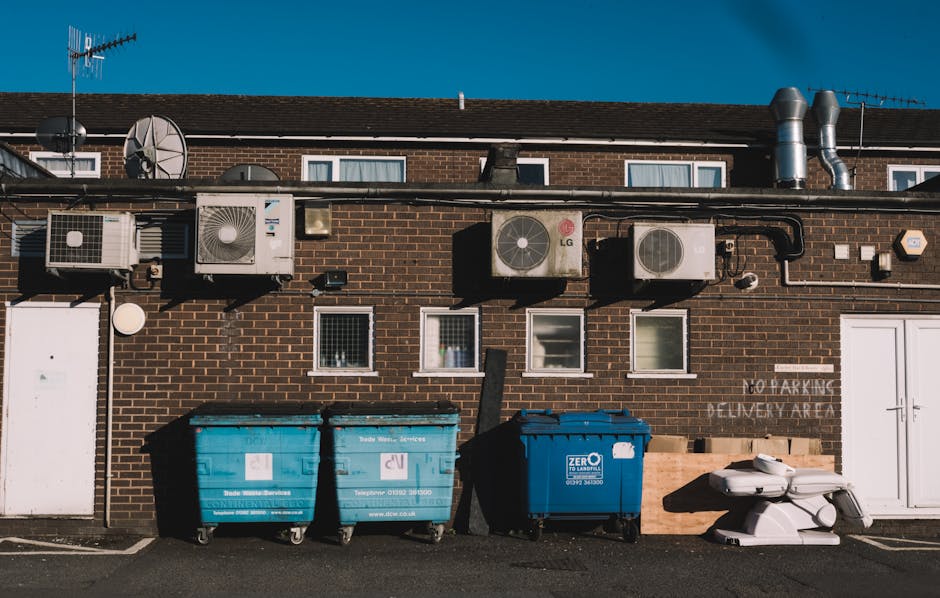
Cippenham bulky rubbish clearance options for estate flats: a practical local guide
If you live in an estate flat in Cippenham, bulky rubbish can become awkward fast. One old sofa in the hallway turns into a fire-safety issue, a broken wardrobe blocks the lift, and suddenly the bin store looks like a mini skip that nobody asked for. Cippenham bulky rubbish clearance options for estate flats are not just about getting things out of sight; they are about choosing a safe, sensible, and fair way to move large items without upsetting neighbours or estate managers.
That is the real challenge, isn't it? A bulky item is easy to ignore in the corner of a room, but a lot harder to shift once you live several floors up, share access routes, or need to work around parking restrictions. This guide walks through the main options, what works best in estate settings, and how to avoid the common headaches that creep in when a clearance is rushed.
You will find plain-English advice on access, timing, disposal methods, compliance, and what to ask before booking. There are also comparisons, a practical checklist, and a real-world example so you can make a decision that fits your flat, your block, and your budget.
- Why it matters
- How the clearance process works
- Key benefits and practical advantages
- Who needs it and when it makes sense
- Step-by-step guidance
- Expert tips for better results
- Common mistakes to avoid
- Tools, resources and recommendations
- Law, compliance, standards, or best practice
- Options and comparison
- Case study
- Practical checklist
- Conclusion
- Frequently asked questions
Why Cippenham bulky rubbish clearance options for estate flats Matters
Estate flats create a different kind of rubbish problem from a house or a ground-floor maisonette. There is less storage, shared entrances, and more chance of obstruction in corridors, stairwells, lifts, bin stores, and parking bays. A bulky item can become a nuisance long before it becomes a disposal task.
In Cippenham, that matters because many residents need a practical way to clear old furniture, white goods, mattresses, broken shelving, or mixed household items without dragging them across the estate in stages. One item can be manageable. Three or four items, plus a narrow stairwell and no parking outside the block? Different story entirely.
There is also the neighbour factor. Estate living works best when rubbish does not linger in shared spaces. In our experience, the sooner bulky items are removed, the less likely they are to trigger complaints, attract pests, or get mistaken for fly-tipping. It sounds simple, but let's face it, a hallway is not a storage room.
For landlords, managing agents, and tenants, choosing the right clearance option also reduces the chance of disputes over responsibility. Is the item from a communal area? Was it left by a previous occupant? Does the flat have lift access or only stairs? These details shape the best route.
And then there is safety. Heavy items moved badly can damage walls, flooring, lift doors, and backs - usually in that order, annoyingly. So the best bulky rubbish clearance option is not always the cheapest on paper. It is the one that fits the building, the item type, and the practical reality of estate living.
How Cippenham bulky rubbish clearance options for estate flats Works
Most estate flat clearances follow a similar pattern, even though the exact service style may vary. The first step is usually a quick assessment of what needs removing, how much there is, and whether there are any access issues such as locked gates, permit-only parking, limited lift availability, or tight stairwells.
From there, the main options usually fall into a few categories:
- Man-and-van style collection for one-off bulky items or smaller clearances.
- Flat clearance or home clearance service for larger volumes, especially if several rooms are involved.
- Furniture disposal for sofas, wardrobes, tables, beds, and similar items.
- Waste removal for mixed household rubbish where sorting and loading are needed.
- Specialist collections for awkward, heavy, or access-sensitive items.
If you are comparing services, the real question is not "can they take rubbish?" but "can they move it efficiently from this particular block?" That means checking whether the team is used to flats, whether they can work around lift sizes and corridor widths, and whether they understand estate rules about loading points and shared access.
For many people, a dedicated flat-clearance approach is more practical than trying to piece everything together item by item. If the job includes furniture, assorted clutter, and a few things that have been sitting in a spare room for months, a broader service like flat clearance often makes more sense than a narrow single-item collection.
There is also the disposal side. Reusable items may be separated from general waste, and recyclable materials should be treated differently where possible. A decent operator will usually sort what can be reused, recycled, or disposed of properly rather than just loading everything blindly. That is better for the environment and often better for your costs too.
A quick note on timing: estate flats can be easiest to clear early in the day, before resident traffic builds up. Mid-morning is often calmer than late afternoon. You know the drill - fewer school-run bags, fewer delivery vans, fewer people waiting for the lift with a suitcase the size of a small fridge.
Key Benefits and Practical Advantages
Choosing the right bulky rubbish clearance option for an estate flat has a few clear advantages, and they are not just about convenience.
- Less disruption in shared areas. Good planning keeps hallways, lifts, and bin stores usable for everyone.
- Reduced lifting stress. Professional handling lowers the risk of injury or damage.
- Faster turnaround. What could take you a whole weekend may be handled in a short visit.
- Better disposal outcomes. Furniture, metal, wood, and general waste can be separated more responsibly.
- Cleaner handover. Useful for tenants moving out, landlords preparing a re-let, or families clearing a flat after a change in circumstances.
There is a quieter benefit too: peace of mind. You do not have to look at the pile in the corner and think, "I'll deal with that later," every time you walk past it. Truth be told, that little mental weight matters more than people admit.
If your items are mainly furniture, it can help to look at the wider disposal route rather than only the removal itself. A service focused on furniture clearance or furniture disposal may suit a flat better than a general solution if the job is mostly sofas, chairs, beds, and cabinets.
For landlords and agents, the practical advantage is consistency. When a clearance team understands estate layouts, the job is usually smoother, with fewer delays and fewer awkward "we couldn't park anywhere" moments. And nobody wants those.
Who This Is For and When It Makes Sense
This kind of clearance is useful for a fairly wide range of people, but the common thread is simple: bulky items in a shared building need a sensible removal plan.
- Tenants who need to remove a sofa, bed base, wardrobe, or pile of mixed unwanted items.
- Homeowners in flats who are decluttering, renovating, or replacing furniture.
- Landlords dealing with items left behind after a tenancy.
- Managing agents who need communal or vacant-flat items cleared efficiently.
- Families clearing a relative's flat with sensitivity and care.
- Anyone with access constraints such as limited parking, stairs only, or narrow corridors.
It makes sense when the items are too large for normal bins, awkward to carry yourself, or too many to manage in a single car journey. A single chest of drawers is one thing. A full room of mixed furniture and household clutter is another. The second one usually benefits from a planned clearance visit rather than a DIY scramble with a borrowed hatchback.
It also makes sense when time is tight. If you are leaving a flat, preparing for cleaning, or trying to satisfy an inventory deadline, a structured clearance can save a lot of stress. The flat feels different once the heavy stuff is gone. Suddenly the room breathes again. Sounds dramatic, but if you've ever stood in a vacant flat with the curtains half open and a stripped mattress leaning against the wall, you'll know what I mean.
Step-by-Step Guidance
If you want the job to go smoothly, a little preparation goes a long way. Here is a practical way to approach Cippenham bulky rubbish clearance options for estate flats without overcomplicating it.
- List the items clearly. Note what needs removing and whether any pieces are especially heavy, fragile, or awkward.
- Check access points. Measure lift doors, stair turns, and door frames if the item is large or boxed in.
- Look at estate rules. Some blocks have quiet hours, loading restrictions, or requirements for vehicle access.
- Separate reusable items. If something can be donated, sold, or kept, pull it out before the clearance day.
- Photograph the items. This helps with quotes and avoids any confusion on the day.
- Ask how loading will work. Will the team use stairs, a lift, a rear access point, or a designated bay?
- Prepare the route. Clear loose obstacles, move small items aside, and protect flooring if needed.
- Confirm disposal expectations. Ask whether the service includes lifting, loading, sorting, and disposal.
One useful habit: keep doors propped open only if it is safe and permitted. That tiny detail can shave minutes off the job and make the whole process less stop-start. Small thing, big difference.
If you are comparing broader clearance services, you may also want to look at home clearance or house clearance pages to understand how a bigger clearance differs from a flat-focused job. Even if you only need a few items removed now, it helps to know the next step if the job grows.
Expert Tips for Better Results
These are the little things that tend to make the biggest difference in estate-flat clearances.
1. Group items by type before the team arrives
Put furniture together, bag loose rubbish, and keep electricals separate if possible. Even a rough sort helps the crew move faster and avoids confusion in a cramped hallway.
2. Measure before booking
If an item has to pass through a narrow door or a tight turn on the stairs, a quick measurement can prevent surprises. That awkward moment when a wardrobe gets stuck sideways is funny once. Not during the lift.
3. Check whether the block has booked access rules
Some estates are more formal than people expect. There may be loading zones, fob-controlled gates, or restrictions on leaving items outside. Confirming these in advance saves time and frustration.
4. Think about timing around neighbours
A clearance at a sensible hour is just kinder. Morning or late morning often works best. The building is usually quieter, and there is less pressure on lifts and parking.
5. Be honest about the volume
If you understate how much there is, the visit may need rescheduling or extra loading time. A clear photo is worth more than a vague description. Always.
There is also a sustainability angle. If you want to reduce waste, look for a service that supports sorting and reuse where suitable. A responsible operator should be able to explain what happens to the items after collection. For readers interested in the wider approach, recycling and sustainability is worth a look because it frames the disposal side in a more thoughtful way.
Common Mistakes to Avoid
Most clearance problems in estate flats are not dramatic. They are just small avoidable mistakes that snowball. A few examples come up again and again.
- Leaving bulky items in communal areas too long. This can cause obstruction, complaints, and in some cases enforcement action.
- Choosing the cheapest option without checking access. A low price can become less attractive if the team cannot complete the job efficiently.
- Forgetting about lift size or stair turns. A sofa that looks manageable on paper can be a nuisance in reality.
- Not separating recyclable or reusable items. That can increase waste and sometimes increase the effort needed on the day.
- Assuming estate staff will handle everything. They may guide access, but they are not there to clear personal items for you.
Another common slip is not checking whether the quoted price includes loading from the flat itself or only curbside collection. Those are very different services. If the item must come down three flights of stairs, the quote should reflect that. If it does not, ask before you book.
And if the items are being removed after a tenancy or a family move, do not leave it too late. Once keys change hands or cleaning starts, access becomes much more awkward. A little urgency helps here.
Tools, Resources and Recommendations
You do not need much equipment for a successful flat clearance, but a few simple tools and habits make life easier.
- Tape measure for checking item dimensions and access points.
- Strong bin bags or rubble sacks for smaller loose waste.
- Marker pen and labels if you are sorting keep, donate, and remove piles.
- Phone camera for recording the items before booking.
- Gloves and sturdy footwear if you are moving anything yourself.
- Door stops or protective covers where building rules allow them.
If you are still deciding which service style fits, it can help to compare a specific furniture job with a more general removal. For example, an item-heavy clear-out may align with waste removal, while one or two pieces of furniture may fit a narrower service better. The best choice is usually the one that matches the shape of the problem, not just the headline wording.
For jobs involving a loft or storage overflow alongside flat items, a separate clearance route may also be relevant. That is where pages such as loft clearance can be useful for understanding how packed or awkward spaces are typically handled. It sounds slightly odd in a flat context, but many estate homes have storage cupboards, boarded loft access, or a surprising amount of forgotten stuff tucked away.
If you want to check company background, policies, or the service approach before booking, it is perfectly reasonable to review the business information and safety pages too. Clear communication is a good sign. So is a provider that makes it easy to understand what is included.
Law, Compliance, Standards, or Best Practice
Bulky rubbish clearance in estate flats sits within a practical framework of safety, waste handling, and shared-building responsibility. You do not need to become a legal expert, but a few principles matter.
First, items should not be dumped in communal corridors, entrances, or bin stores unless there is a clear permitted process for doing so. Shared spaces must stay safe and accessible. That is basic good practice, and in many buildings it is also a formal requirement under estate rules or lease terms.
Second, waste should be handled by people who dispose of it properly. In the UK, you should be cautious about handing items to anyone who cannot explain where the waste will go or how it is managed. If a clearance offer sounds too casual, that is usually a warning sign. Nobody wants their old wardrobe becoming somebody else's fly-tip, somewhere down the line.
Third, heavy lifting needs sensible risk management. Safe routes, suitable handling, and avoiding damage to common areas are all part of good practice. Responsible operators should also be insured and clear about safety procedures. If you want more detail on working methods and protection, the site pages on health and safety policy and insurance and safety are useful references.
There is also a broader responsibility around environmental handling. Furniture, metal, electricals, and general waste do not all belong in the same bucket. Sorting them properly is not only tidier; it is more in line with accepted waste management practice. When in doubt, ask how the items will be separated.
Finally, if you are a tenant, check your own lease, tenancy agreement, or estate rules before placing anything in a communal area. It is easier to ask than to clean up a dispute later. A small bit of caution now saves a much bigger headache later.
Options, Methods, or Comparison Table
Here is a straightforward comparison of common bulky rubbish clearance options for estate flats in Cippenham.
| Option | Best for | Typical strengths | Possible drawbacks |
|---|---|---|---|
| Man-and-van collection | One-off bulky items, small loads | Flexible, quick, useful for limited space | May be less efficient for larger clearances |
| Flat clearance | Multiple rooms, mixed items, end-of-tenancy jobs | Broad, practical, suited to estate access issues | Not always ideal for a single item |
| Furniture disposal | Sofas, beds, wardrobes, tables | Good for large household pieces | Less useful if the job also includes clutter and loose waste |
| General waste removal | Mixed rubbish and bagged items | Handy when the load is not all furniture | Can be less targeted for very large items |
| Home or house clearance | Larger or more complex clear-outs | Suitable when the job extends beyond one flat room | May be broader than needed for a simple estate-flat task |
The best choice usually comes down to volume, access, and item mix. If it is one or two items with straightforward access, a smaller collection can be enough. If the job involves a full flat, a broader clearance option is usually better value and less stressful.
For pricing and quote preparation, it can also help to review pricing and quotes so you know what details to have ready before you ask for an estimate. A clear description almost always leads to a more useful response.
Case Study or Real-World Example
Here is a simple example from a typical estate-flat scenario. A resident in a second-floor flat in Cippenham had a broken sofa, a dismantled wardrobe, an old mattress, and several bags of mixed household clutter. The block had a shared entrance, a narrow stairwell, and limited parking near the front. Nothing extreme, but enough to make a DIY removal annoying.
The sensible approach was to photograph the items, confirm stair access, and arrange a flat-focused collection rather than trying to piece it together with multiple trips. The team could assess the route in advance, plan the loading order, and avoid blocking the corridor while searching for space to turn the sofa. That sounds minor. It is not minor when you are carrying a bulky frame on a landing that barely gives you room to breathe.
Because the items were grouped before collection day, the process was quicker and calmer. The resident did not need to worry about hiring a van, finding parking, or trying to manoeuvre furniture alone. The flat was left ready for cleaning, and the estate entrance stayed clear. Simple, but effective.
That example reflects the main point of this article: in estate flats, the right clearance option is the one that fits the building as much as the rubbish. The building matters. A lot.
Practical Checklist
Use this checklist before you book or carry anything out yourself.
- Have I listed every bulky item that needs to go?
- Have I checked if any items are reusable, sellable, or should be donated?
- Do I know whether the block has access restrictions or loading rules?
- Have I measured large items against doors, lifts, and stair turns?
- Have I taken photos for a clearer quote?
- Do I know if the collection includes carrying items from inside the flat?
- Have I cleared a safe route through the flat and communal areas?
- Do I understand what happens to the waste after collection?
- Have I checked the timing so neighbours are not disrupted unnecessarily?
- Have I confirmed the final price basis and any possible extras?
If you can tick most of those off, you are already ahead of the game. That may sound basic, but basic is often what makes the day go smoothly.
Get a free quote today and see how much you can save.
Conclusion
Choosing among Cippenham bulky rubbish clearance options for estate flats is really about balancing convenience, access, cost, and building rules. The best solution is rarely the most dramatic one. It is usually the one that respects the shared space, removes the items safely, and leaves no loose ends behind.
If you take one thing from this guide, let it be this: a bit of planning saves a lot of lifting, delays, and awkward conversations in the stairwell. Whether you need one sofa removed or a full flat cleared, the process is much easier when you match the service to the building and the items, not just the price tag.
And once the clutter is gone, the flat often feels lighter in a way that surprises people. A room can change mood very quickly. Clean floor, clear path, daylight back through the window. Lovely, really.
Frequently Asked Questions
What are the best Cippenham bulky rubbish clearance options for estate flats?
The best option depends on the item type, volume, and access. For one or two items, a smaller collection may be enough. For mixed furniture and clutter, a flat clearance service is often more practical.
Can bulky rubbish be taken out of a flat if there is no lift?
Yes, usually, but the service needs to account for stair access. That is why photos, measurements, and honest descriptions matter. Some items may need extra handling, so check before booking.
Is it cheaper to clear bulky rubbish myself from an estate flat?
Sometimes, but not always. Once you factor in van hire, time, parking, fuel, and the effort of carrying items through shared spaces, a professional option can be more efficient and less stressful.
What items count as bulky rubbish in a flat?
Common bulky items include sofas, mattresses, wardrobes, tables, chairs, beds, drawers, and large electricals. Anything that does not fit normal household bins or is awkward to move can fall into this category.
How do I know if my estate has special rules about rubbish removal?
Check your tenancy agreement, lease, or estate notices, and if needed ask the managing agent. Many blocks have guidance on access, loading bays, quiet hours, and communal area use.
What should I do before a bulky item collection in a flat?
Measure access points, take photos, separate reusable items, and clear a route through the flat. If possible, group the items together so collection is faster and safer.
Can old furniture be reused or recycled?
Often, yes. If furniture is in reasonable condition, it may be suitable for reuse. Other items can sometimes be separated for recycling depending on material type and condition.
How long does a typical flat clearance take?
It varies by volume, access, and item type. A small job may be quick, while a fuller clearance will take longer. The key factor is usually how easy it is to move items safely from the flat to the vehicle.
What happens if the furniture is too large for the stairwell?
That is why it helps to measure beforehand. If an item will not fit, it may need dismantling or a different removal plan. Good planning avoids wasted visits and damaged walls.
Do clearance teams remove items from inside the flat or only from outside?
That depends on the service and the quote. Some collections include carrying items from inside the property, while others may only cover curbside loading. Always confirm this before booking.
Are there any compliance concerns with estate-flat rubbish removal?
Yes. Items should not be left in communal areas without permission, and waste should be disposed of responsibly. It is wise to choose a provider that follows safe lifting and proper disposal practices.
What if I need a larger clearance, not just a single bulky item?
If the job has grown beyond one or two items, a broader service such as flat clearance or waste removal may be better suited. It often works out cleaner, quicker, and less complicated overall.